 McClelland Tobacco Pipe smokers around the world are in mourning after McClelland Tobacco announced in February that it would cease production of its world-class Virginia and Oriental pipe tobacco blends, effectively ending 40 years of creating some of the finest smoking tobaccos ever produced. McClelland was founded in 1977 by Carl and Mary Ehwa and their partner Bob Benish.

With such a long history of excellence and universal acclaim, one might wonder what could have persuaded the McNiels to discontinue the brand and cease production. “In our view, it’s kind of a perfect storm, what happened in the tobacco business,” says Mary. “The FDA [U.S. Food and Drug Administration] is always in the background. Even now, the effects of the FDA are considerable. They don’t want you to make any new products.

If you do make a new product, it has to go through the premarket authorization, which I do not believe anyone has passed. And it’s considerably expensive. We’re told the cost is $2,000 to $2,300 per test.
 Owing to their devotion to quality and quest for perfection, the company was in no hurry to bring new blends to the market. As Mary stated emphatically, “It has to be excellent.” They began to produce a full line of bulk tobaccos, initially Virginias and Oriental mixtures, then adding premium-grade aromatics, allowing tobacconists to offer McClelland - quality private label tobaccos to their customers.
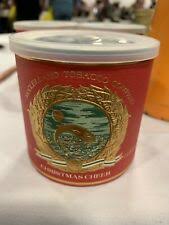
McClelland then launched an ambitious project to produce innovative proprietary blends with its Craftsbury series. Most notable among them was Frog Morton, a moist, soft-smoking Latakia mixture that managed to combine its subtle smokiness with an alluring fragrant quality.

Frog Morton became the go-to mixture for introducing smokers of aromatic tobacco to the more sophisticated Latakia mixtures. Later releases would include Blakeney’s Best, Grand Orientals, Syrian Latakia blends, Master Penman and others too numerous to list here. In all, by the end of its tenure, McClelland’s tobacco blends included more than 240 varieties.

The three partners worked side by side, perfecting the art of blending and aging fine tobaccos. Then, tragically, in 1982, Carl suffered an aneurysm and did not return to the business. He later passed away at age 50. Throughout that difficult period, the company continued to grow at a gradual, methodical pace.
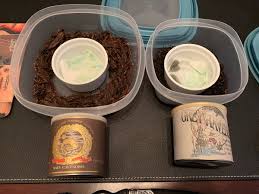
Eventually, Mary and longtime colleague Mike were married, creating a personal and professional partnership that was able to move forward the vision of the boutique manufacturer and to expand on the initial offerings. 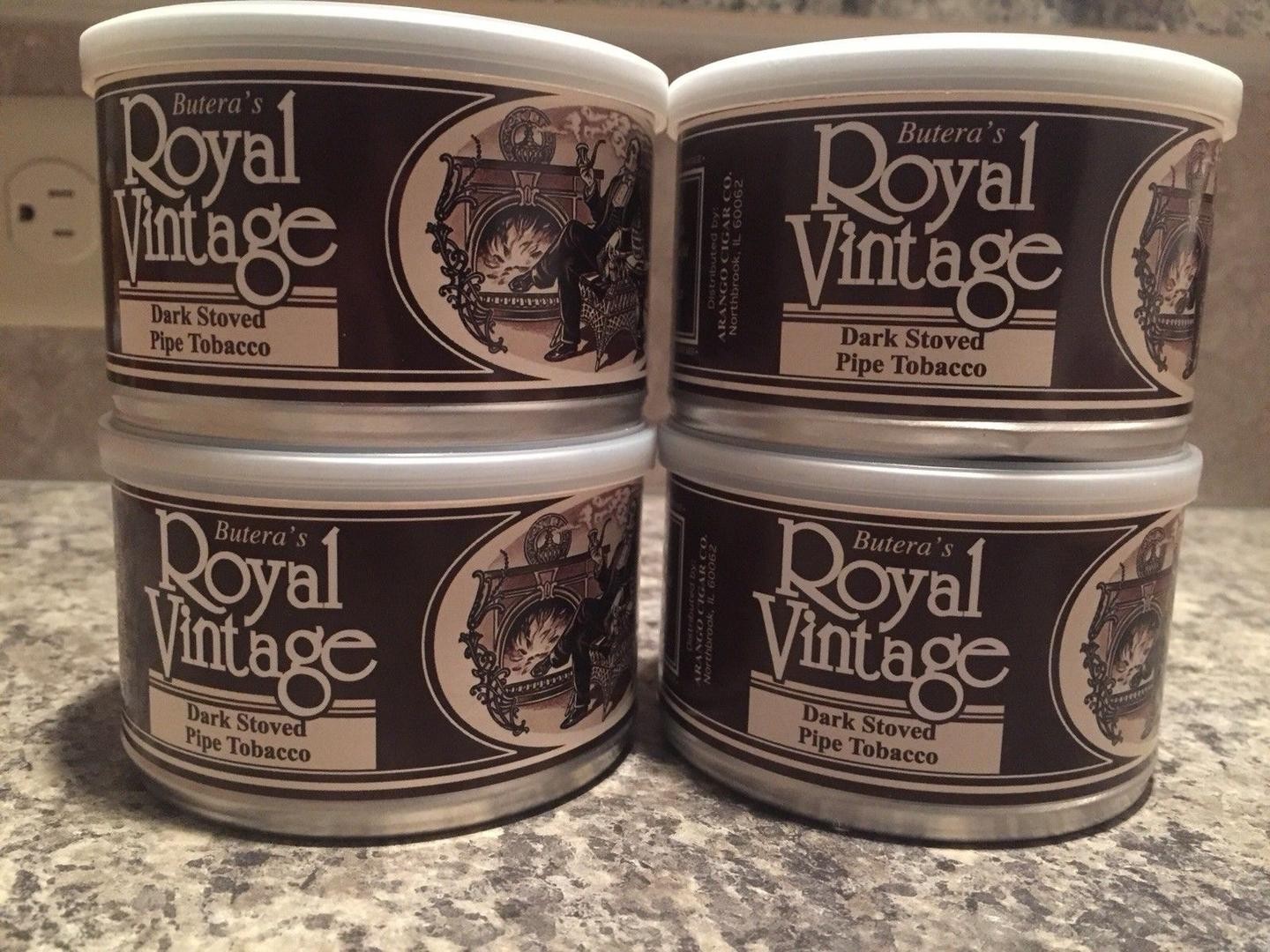

For many American pipe smokers, McClelland picked up the mantle of Scottish-style tobaccos when Rattray’s was purchased and moved to Germany. While following in the footsteps of Rattray’s may not have been the impetus for launching the McClelland brand, 
McClelland quickly set a new standard for rich, complex tobacco blends, which imparted the unique tang and natural sweetness only matured Virginia can offer. Pipe smokers noticed. Within a few years, McClelland Tobacco could be found on the shelves of most serious tobacconists nationwide. Mike McNiel, who had also worked for Diebel’s, joined the team in 1980, when Bob left to pursue other options.


At the time, Carl and Bob had been working for Diebel’s, a well-known tobacconist in Kansas City, Missouri. “Carl had developed blends for Diebel, and Fred Diebel had purchased factory equipment,” recalls Mary. “I think that was in 1969. By 1977, Carl wanted to create more blends than Diebel was interested in. So there was a friendly parting, and McClelland began.” The new brand was initially introduced in 10 blends: five Oriental mixtures and five matured Virginias.

The concept was very much in the style of the vaunted Scottish brand Rattray’s, which utilized matured  Virginia, as opposed to the bright Virginia typically used in English mixtures. Mary recalls, “We thought the blends had changed. The Rattray’s blends were very popular at Diebel’s because Carl and Bob liked them so much. I’m not sure we realized Rattray’s had been moved to Germany at that time.” The McClelland brand was immediately recognized for its distinctive embossed labeling—brown for Virginias and green for Orientals—as well as for its painstakingly crafted aged tobaccos.
 McClelland released the Personal Reserve series, making widely available the blends that had been created exclusively for Levin Pipes International. “
My husband Mike is the heart of McClelland. And he goes to such extreme lengths to make sure that everything is just right. And we’re a small company. There’s no way a larger company would go to the same lengths to do this, to produce this type of product.
“My leaf buyers said that, The way things are handled today, the way it’s processed today, is 180 degrees from what McClelland needs,” she says. “The leaf we’ve always depended on has to be picked when it’s ripe. The whole process was very labor-intensive. They used to go through the fields to pick leaves five different times, progressively going up the plant.

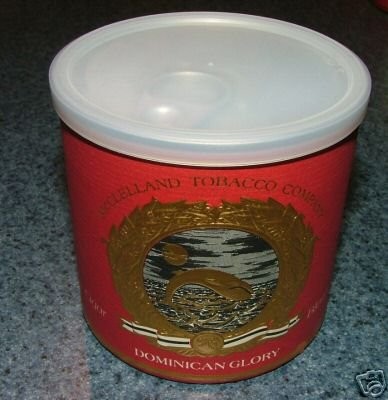

Their agents who represented them at tobacco auctions were instructed only to bid on the very best lots of tobacco available. As Mary tells it, the government’s exit from subsidizing and partnering in the cultivation of tobacco, in addition to its obvious agenda to discourage smoking, led to such a reduction of quality leaf tobacco they simply could no longer produce the level of product they would put their name on. Now what they’re doing is mechanical harvesting, and that pulls the green along with the ripe. Then when that leaf is put through the flue-curing process, which is intended to seal in the sugars; that unripe leaf has no sugar to seal in!” A manufacturer like McClelland, which uses only high-grade leaf, simply cannot produce the same level of quality tobaccos from the caliber of Virginia tobacco now available to them. “We can still get Perique, we can still get Latakia, we can still get burley. But we never based our business on burley, so when you add up all the products that we have had, if you take away all the ones that require matured Virginia, it’s down to so few that we can’t make a living from it.” So why not sell the McClelland brand to an existing tobacco manufacturer? The response: “We’re a company that is obsessed,” says Mary. “My husband Mike is the heart of McClelland. And he goes to such extreme lengths to make sure that everything is just right. And we’re a small company. There’s no way a larger company would go to the same lengths to do this, to produce this type of product. They wouldn’t have our level of obsession.” With the potential for remaining in the industry remote, Mary reflected on the couple’s tenure in this amiable business, as well as her feelings about leaving it. “You know, it’s kind of bittersweet,” she says. “The parts that have been difficult to deal with, the negative things, we’re happy to leave those. But having the products that we’ve had, it’s been great fun. It’s been a joy developing new products and having people like them as much as we like them.”
 This Life and The Reality in Totality.


I am a Catholic by birthright but an avid researcher of all things religion, science, paranormal and psychological. From a young age I was always asking the questions that are earliest ancestors pondered such as "Why are we here and Why am I here?" Starting in junior high school. I began to look back on various experiences in my life. Up to that point life was simple as it is for most youth. Routine home life and of course scholastically you would say I was an "A Typical Youth."
But all along I noticed that I was seeing the world a bit unlike my peers from these early years well into my young adulthood. I would notice the details in things such as philosophy, religion and nature. Human interaction was a special concept to meditate on as I was often alone as a child. Not for any other reason except I prefer it that way most times. The stillness of a snow filled night, the quiet of an autumn in the woods and of course the tranquility that exists beside almost any stream of water. Of course there are birds and other wildlife but there is no people, no cars and none of the sounds of a city (traffic sounds, people from afar). In these places I could lay back and ponder the interactions I would have going about my business.
Each interaction I can recall during that time I would think about when I was working at my father's machine shop or while out walking (as I would often do). More often than not the moments where I would interact with someone was not noteworthy but looking back I see the unusual way in which I would go about thinking these thoughts. I would recall if the person spoke with any sort of accent or speech impairment. Did they move a certain way that was different than my own perceived way of moving? Was the conversation meaningful or spiritual in any way? Had the moment occurred for some particular reason. 
I thought these traits were all together normal but as I aged and looked back as well as compared myself to others in discussing these concepts. I found it was out of the ordinary to do so. I could not find fault in this observation but as time would indicate I would learn that it was a trait many should learn to embrace. I feel that perhaps this way of thinking is innate to my being. Something that was neither taught to me (I feel this is not the case from parental observation and sibling development) or learned from my own development. By the sixth grade I had formed a fairly solid understanding of reality (so far as to say the world was a sphere called Earth). The clouds were made of moisture and that the human body was mainly water as was the Earth.
From these early days I quickly championed the cause of reading and scholastic study in my own private time. I would be found at the library reading primarily non-fiction books on topics ranging from the military, physical science (earth sciences), geology and electricity (a passion of mine). For a time the study felt, to me, to be filling a void in my life that my parents could not provide and that I was not learning in school already (or had previously studied). For the most part school was boring and the lessons being taught were of a mundane nature or having nothing applicable to the daily life I would seen be living in adulthood. I found particular disgust with lessons from history class and literature classes.
 In retrospect I would have enjoyed thoroughly the teaching of today's youth. A career in IT is literally given to the youth in High School with a variety of programs (all IT related) being offered at all levels of scholastic education. The field of science has expanded tremendously and now features a great deal of hands on learning as well as team efforts to create projects that alone foster teamwork building skills as well as public presentation skills. Not to be missed is of course the explosion of video lessons and tutoring. No child can possibly fail in learning with these tools at their disposal. Not only is the information available by the terabyte but you can find expansive coverage on almost any topic online. From collegiate level academia papers to PDF available learning guides. All this would have been of great significance in my formative years as a wayward youth.
Instead I left school feeling mostly that I had received training in speaking to people, reciting useless facts about the USA and old world as it was once known and the finer points of modern English which was not a favorite but came rather easy to me in study. Once high school was completed I found myself with full knowledge of the "real world" and the pursuit of income as the primary reason for existing as a human here in the United States on planet, Earth.  Once you are separated from your family the only possible survival is that of endeavoring to maintain employment or pursue a form of income that would remain constant throughout your life. Finding yourself homeless (for the most part) is death. From starvation to the elements (exposure) you will find that you cannot survive without the basics of Food, Shelter and clean Water.
 I decided that I would begin utilizing the skills I had learned working for my father John L. Orosz throughout my early years working in our family's machine shop/mechanic shop. I worked hard as a child and learned skills such as welding, machining, repairing and dismantling of engines and components. It was another activity in my life that greatly differentiated myself from many of the youth I went to school with. After school and on weekends we (my brothers and I) worked for our father. Covered in oil and smelling like a oil, we would arrive home and turn the white bathtub black in about 45 minutes. My poor mother seemed to always be cleaning something back then.